Saint Anthony the Great
Sodeco - Beirut
About
The Monastery of Saint Anthony the Great
Sodeco – Beirut, Lebanon
History of the Monastery
The Monastery of Saint Anthony the Great in Sodeco - Beirut, is part of the Lebanese Maronite Order.
In 1725 the Lebanese Order had arranged itself a house in Beirut. Following the partition of the two Orders in 1770, this house fell to the lot of the Aleppine Monks (the Maronite Mariamite Order).
In 1892, when Benedict (Mubarah) Salameh was Father General (1891-1895), the Lebanese Maronite Order bought a building situated near Saint Joseph's, the university which belongs to the Jesuit Fathers. This building was transformed into a residence for the student monks who were to follow courses at this university, The Order bought the building for one thousand and one hundred French gold pounds, which was raised by selling a property in the az-Ziri region at Dayshouniye.
In 1846, which marked the beginning of the educational renaissance launched in the middle of the nineteenth century, the Order had sent some of its most brilliant students to the seminary of the Jesuit Fathers at Ghazir, where they received their diplomas of higher studies. This fact enabled them to make an effective contribution to the renaissance.
During the course of the First World War (1914-1918), the Jesuit Fathers took refuge in this monastery and remained there for the duration of hostilities, following the closure of their university by the Turkish authorities. Similarly, some of their foreign students went to the Order's school at the Monastery of Our Lady of Succour (Saydet al-Maounat) at Jbeil.
Between 1929 and 1938, the Order purchased property near the school and on it completed the building. The school was transformed into a canonically erected monastery in 1940, and then was twice the permanent Mother House of the Lebanese Maronite Order, from 1939 to 1944 and from 1950 to 1986.
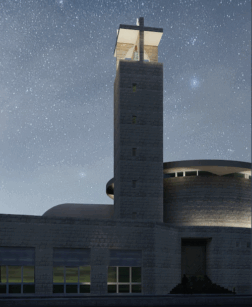
In 1977, the monastery was restored and renovated, taking on its present form. The monks who followed in charge busied themselves with completing both the monastery and the church, on which work started on June 4, 1960, and with printing activity which for a time contributed to the cultural work of the Order through various publications and editions. They also set about founding a modern Theological Institute providing for the theological education of the rising generation, thanks to an elite of priest professors from the Holy Spirit University at Kaslik.
The events in Lebanon between 1975 and 1990 put an end to these projects. However, after the return of public security, the Order has taken up again its spiritual mission exercised through its pastoral action, particularly since the monastery chapel was designated as a parish church on December 1, 1986, and through the Ecclesia Centre founded by the Order to provide the monasteries, parish churches and clergy with the sacred vessels, priestly vestments and liturgical objects they require.
The Monastery
1725
Foundation Year - The Lebanese Maronite Order acquired a house for the monks in Beirut.
1891-1892
New Building & School - The Order bought a new building and transformed it into a school and a residence for the monks.
1914-1918
WWI Refuge - Jesuit fathers took refuge in the monastery during the course of the First World War.
1928-1938
New Property - The Order purchased a new property next to the existing building.
1940
The Monastery - The building was canonically erected as the Monastery of Saint Anthony the Great.
1938-1944
1950-1986
Mother House - The monastery became the Mother House of the Lebanese Maronite Order.
1986
The Parish - The monastery chapel was designated as a parish church on December 1, 1986.
Monastery's Church Icons
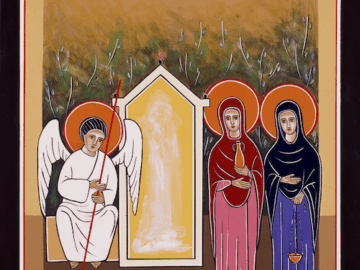
Icon: The Resurrection
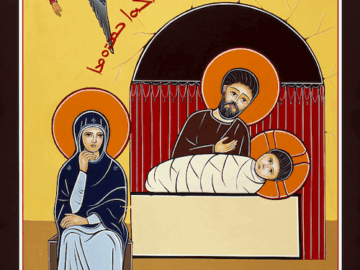
Icon: Birth of the Lord